HVCRC conductorsCORECHECK ReconductoringEnergy transitionEfficiency
Composite cores are the key enabling technology behind advanced conductors (HTLS – High Temperature Low Sag) used in overhead transmission and distribution lines.
They allow grid operators (TSOs and DSOs) to increase the capacity of existing transmission and distribution lines, reduce thermal sag, and improve grid efficiency without modifying pylons or building new infrastructure.
Composite core conductors are now widely deployed worldwide in large-scale grid modernization and reconductoring programs. They have become the reference solution for increasing transmission capacity on existing overhead lines without infrastructure modification.
Epsilon Composite has been one of the early industrial players contributing to the development and large-scale deployment of this technology, and remains one of the leading suppliers of composite cores for HTLS conductors.
definition
What is a composite core for advanced conductors?
A composite core is the structural element of advanced conductors, replacing traditional steel cores used in conventional conductors such as ACSR and ACSS and offering a structurally superior option to fully aluminum designs (AAC, AAAC). Engineered using controlled fiber architecture (carbon fibers or hybrid carbon-glass configurations) combined with thermoset resin systems (typically epoxy), in order to optimize axial stiffness, tensile strength and long-term mechanical stability.
This hybrid construction provides a unique combination of:
- very high tensile strength
- extremely low thermal expansion
- long-term dimensional and chemical stability
key properties
Why composite cores are used in advanced conductors
Composite core conductors overcome the physical limitations of conventional overhead conductors. Key drivers :
Increasing ampacity
without structural modifications
Controlling thermal sag
at high operating temperatures
Reducing electrical losses
up to 30 %
Long-term dimensional stability
with minimal creep
Mitigating operational risks
such as wildfire and corrosion
Leveraging the specific properties of carbon fibers
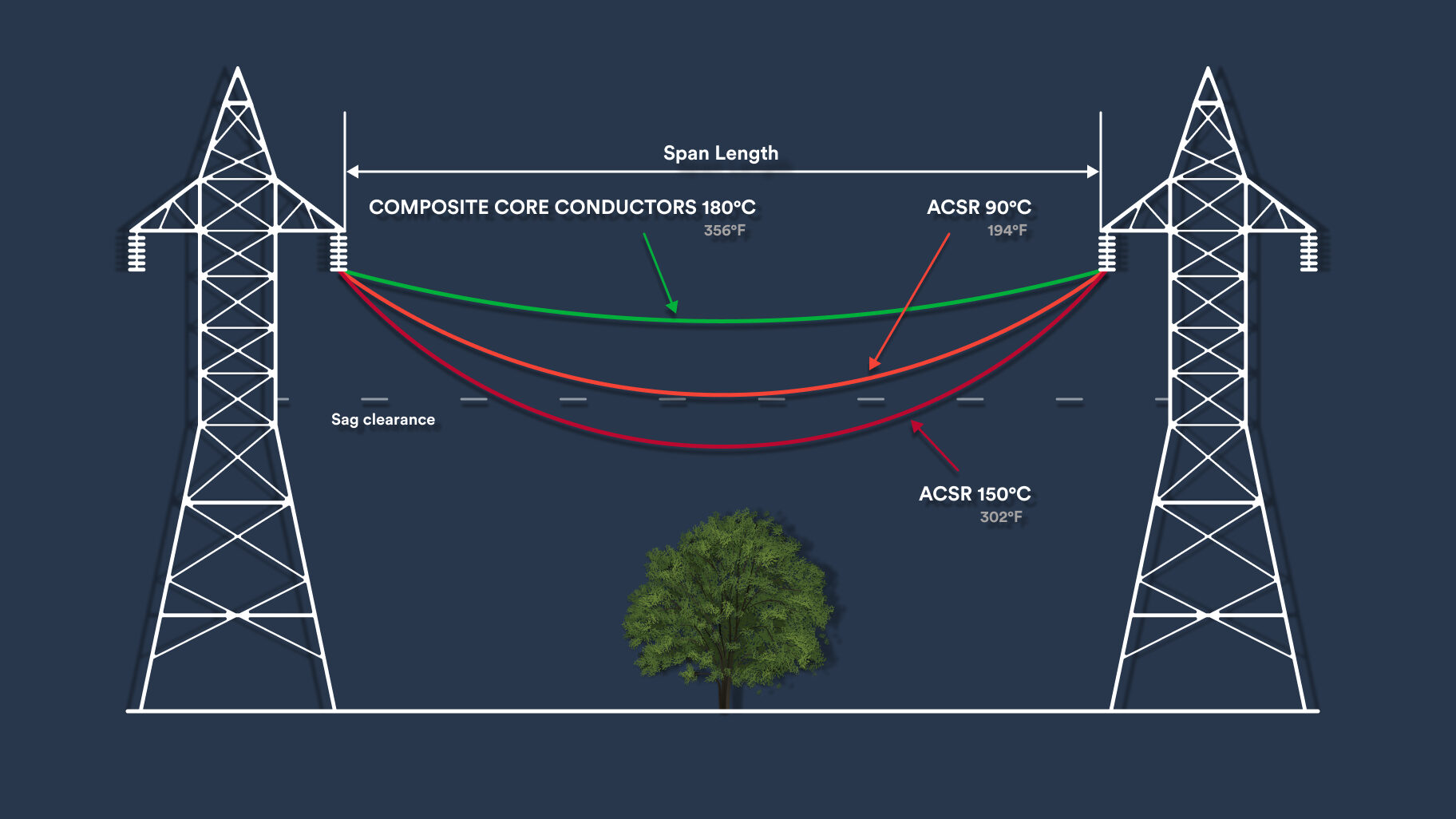
The coefficient of thermal expansion (CTE) of composite cores typically ranges from 0.2 × 10⁻⁶ /°C to 1.3 × 10⁻⁶ /°C.
In comparison, conventional ACSR conductors exhibit an effective thermal expansion more than 10 times higher, in the range of 16 to 19 × 10⁻⁶ /°C
This difference results in significantly reduced thermal sag and improved clearance control.
×10
lower CTE vs steel cores
200°C
maximum operating temperature (emergency mode)
+30 to 100%
ampacity vs traditional conductors
Comparison
Composite cores vs conventional steel core conductors
| Feature | Steel core in ACSR conductor | Composite core (HTLS) |
| Thermal expansion (CTE) | 11.5 ×10⁻⁶ /°C | ~0.2–1.3 ×10⁻⁶ /°C |
| Sag | High | Low |
| Maximum operating temperature | 75–90°C | Up to 180–200°C |
| Ampacity | Baseline | +30% to +100% |
| Long term creep | Significant | Minimal |
our technology
Epsilon Composite’s range of composite cores
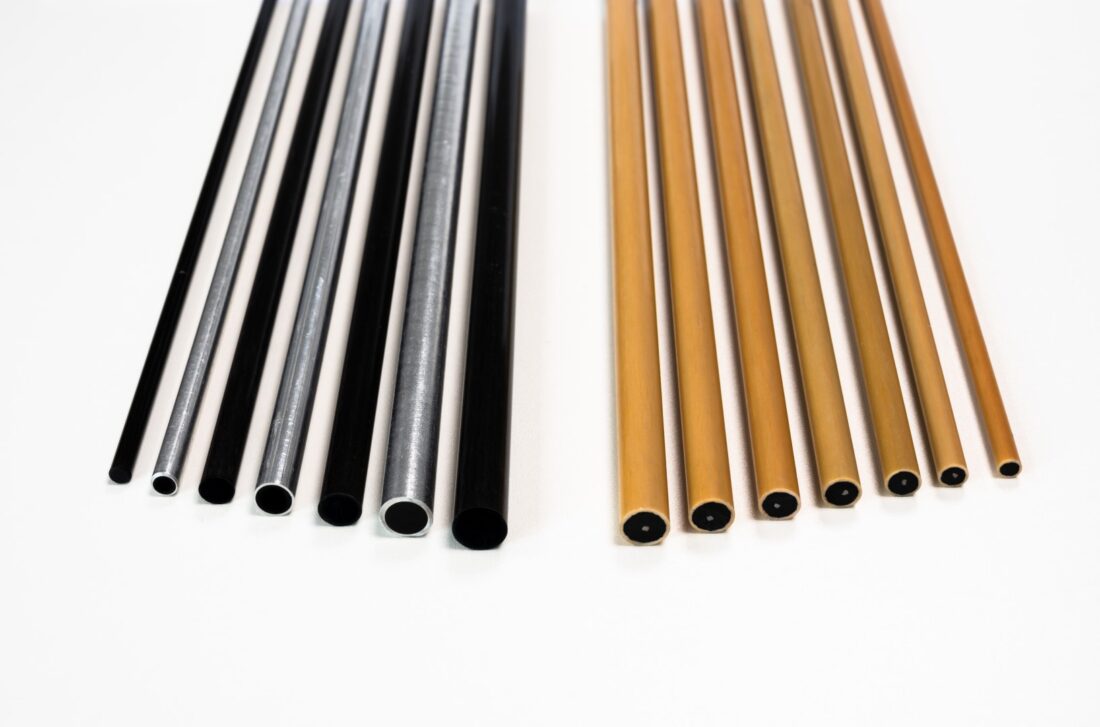
With more than 40 years of experience in carbon fiber pultrusion for demanding applications such as aerospace structures and offshore oil & gas, Epsilon Composite is a long-standing supplier of high-performance composite profiles. This expertise has been extended to the development and industrial production of composite cores for advanced conductors, in collaboration with cable manufacturers and utilities worldwide.
Epsilon Composite developed and qualified a full range of composite cores for advanced conductors, covering multiple mechanical and thermal ratings, and application needs.
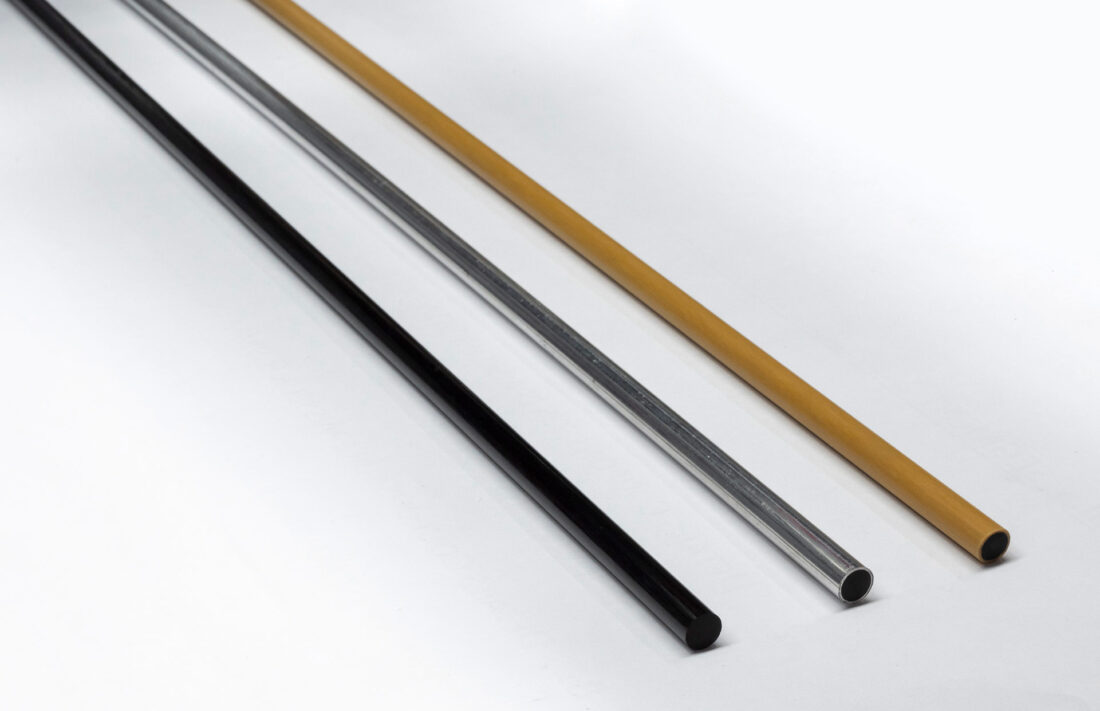
Hybrid carbon-glass cores
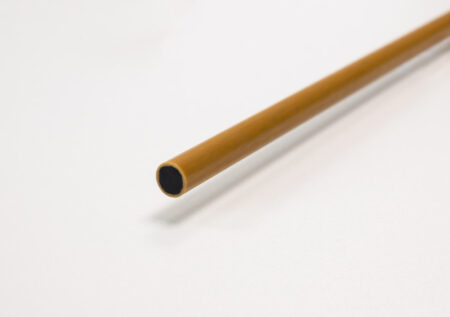
Within Epsilon’s range of composite cores for advanced conductors, HVCRC® is the main technology we developed, which uses a hybrid carbon-glass fiber architecture designed to balance flexibility, strength and thermal stability.
It has been in operation since 2013, with more than 10,000 km installed worldwide.
The HVCRC® range of composite cores covers all common core diameters, from Ø4 mm to Ø12 mm, with several performance grades available:
HVCRC
HTLS version: high-strength aerospace carbon + boron-free glass.
Rated for a maximum continuous operating temperature of 180°C, and 200°C in emergency
HVCRC ULS
Ultra Low Sag: extra high stiffness.
Ideal for wide spans or heavy ice load areas
HVCRC Lite
Standard temperature, 90 – 120° C, epoxy matrix, optimized cost when high-temperature performance is not required.
Learn more about the HVCRC technology
Full carbon fiber cores
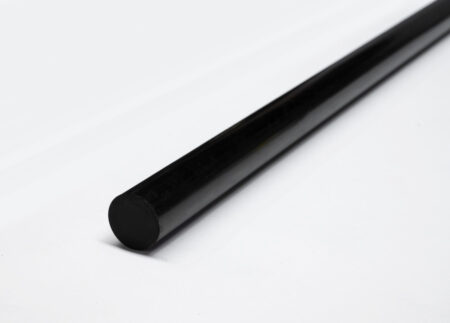
Epsilon Composite’s portfolio also includes carbon fiber aluminum-cladded composite cores designs.
Thanks to their superior mechanical properties, these solutions are particularly suited for applications requiring maximum stiffness and minimal elongation:
- very long spans
- heavy ice load regions
Integrity monitoring
CORECHECK: field integrity verification
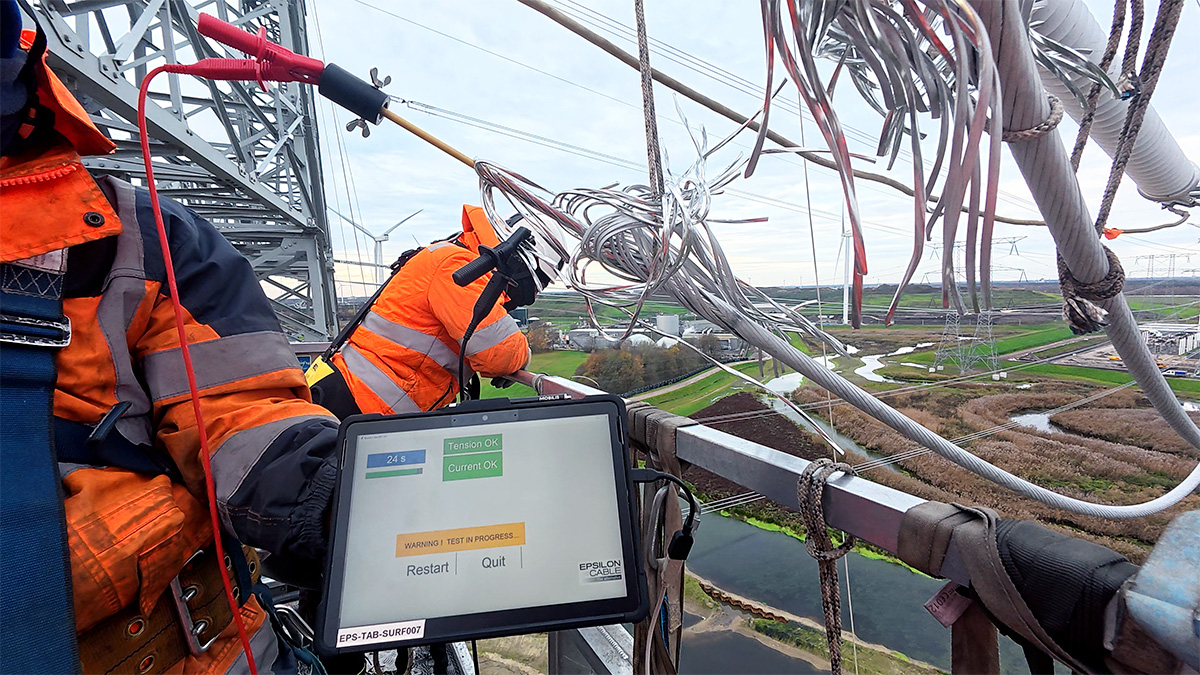
CORECHECK® is a field-deployable integrity verification method developed by Epsilon Cable to assess the condition of composite cores.
It is based on a controlled breakdown voltage test, taking advantage of the insulating properties of the outer glass fiber layer surrounding the carbon core.
This method allows detection of internal defects or damage along the entire length of the core, including manufacturing defects (dry fibers, foreign objects, cracks…) and damage induced during transport, handling or installation (cracks, fiber breakage, internal delamination…)
CORECHECK® can be applied at any stage of a project, from manufacturing to installation and maintenance, with each test typically performed by a single operator in a few minutes after basic training.
This provides utilities with a practical and reliable method to verify composite core integrity in real operating conditions.
Tennet feedback about the CORECHECK technology:
Standards & contribution
Shaping industry standards and best practices
Epsilon actively contributes to ASTM (American Society for Testing and Materials), IEC (International Electrotechnical Commission) CIGRE (International Council on Large Electric Systems) committees to shape standards and best practices, IEEE (Institute of Electrical and Electronics Engineers, NEMA (National Electrical Manufacturers Association)
ASTM B987
Standard specification for carbon fiber thermoset polymer matrix composite core (cfc) for use in overhead electrical conductors
IEC TS 62818-1
Conductors for overhead lines – Fiber reinforced composite core used as supporting member material (Polymeric matrix composite cores)
CIGRE B2.94 Work Group
Inspection after installation, maintenance and end of life of high temperature conductors and fittings
Installation
The installation of composite core conductors is similar to conventional ones
Composite core conductors are installed using methods similar to conventional overhead conductors, but require specific attention to handling and installation practices to preserve the integrity of the composite core.
Unlike steel-core conductors, composite cores are not ductile and must be handled according to defined mechanical constraints, particularly during stringing operations.
Standard stringing methods with adapted practices
Most HTLS composite core conductors can be installed using conventional equipment and stringing techniques. However, some specific precautions must be followed to preserve composite core integrity.
Required precautions:
- Respecting a minimum bending radius
- Avoiding excessive localized stresses
- Using appropriate equipment and tools
Epsilon’s installation support
Proper installation is a critical factor in the long-term performance of composite core conductors.
Epsilon supports conductor manufacturers, EPC contractors and utilities through:
Installation guidelines
Dedicated documentation covering all installation constraints and critical steps.
On-site assistance
Technical support from Epsilon experts directly on site throughout the project.
Crew training
Training sessions for installation crews on all projects to ensure consistent quality.
Detailed installation e-training
Installing the HVCRC is similar to the traditional method. Watch the e-training video to see how it’s done.
- handling and storage
- stringing procedures
- recommended equipment
- inspection steps before and after installation
Access our e-training ressource